


02 May Routine Spa Water Testing Practices Growing in San Diego Homes
San Diego homeowners are increasingly investing in home spas, with reports suggesting that over 35% of new residential upgrades in coastal California include wellness features like hot tubs. As spa ownership rises, so does the need for consistent water care. Many owners now research details like how often to check cyanuric acid in spa to maintain safe and clean water. Proper testing is no longer optional but a routine habit tied to health and equipment longevity. In fact, poorly maintained spa water can increase bacteria growth by up to 70% within days. Therefore, understanding regular testing practices helps San Diego residents protect their investment and enjoy a safer spa experience.
Why Routine Spa Water Testing Matters in San Diego
San Diego’s warm climate plays a major role in spa water chemistry changes. Higher temperatures speed up chemical reactions, which means sanitizer levels can drop quickly. As a result, spa water can become unsafe faster than in cooler regions. Additionally, frequent spa use due to the pleasant weather adds more contaminants like oils and sweat. Regular testing helps detect these changes early and keeps water balanced. Therefore, consistent monitoring is essential for both safety and comfort.
Another key factor is water conservation regulations in California. Many homeowners aim to reduce water waste by maintaining their spa water longer. However, this only works if water chemistry stays balanced over time. Routine testing allows users to correct minor issues before they require draining the spa. Consequently, proper maintenance supports both environmental responsibility and cost savings. This approach aligns with the growing eco-conscious mindset in San Diego communities.
Key Elements of Spa Water Testing
Sanitizer Levels
Sanitizers like chlorine or bromine kill harmful bacteria and keep water safe. In San Diego’s climate, these levels can drop faster due to heat and sunlight exposure. Therefore, testing sanitizer levels at least 2–3 times a week is recommended. Maintaining the right balance prevents cloudy water and unpleasant odors. Moreover, consistent sanitizer levels reduce the risk of skin irritation. This makes routine checks a critical part of spa care.
pH Balance
pH levels measure how acidic or basic your spa water is. Ideally, spa water should stay between 7.2 and 7.8 for optimal comfort and effectiveness. If pH levels go too high, sanitizers become less effective. On the other hand, low pH can cause corrosion and skin irritation. Regular testing ensures that adjustments can be made quickly. As a result, users enjoy a more comfortable and safe spa experience.
Total Alkalinity
Total alkalinity acts as a buffer for pH levels, keeping them stable over time. Without proper alkalinity, pH can fluctuate rapidly, making water harder to manage. San Diego’s mineral-rich water supply can sometimes affect alkalinity levels. Therefore, homeowners should test this factor weekly. Keeping alkalinity within the recommended range improves overall water balance. This also reduces the need for frequent chemical adjustments.
Cyanuric Acid Levels
Cyanuric acid helps protect chlorine from breaking down under sunlight. This is especially important in sunny regions like San Diego. However, too much cyanuric acid can reduce chlorine’s effectiveness. Therefore, it’s important to monitor these levels carefully. Regular testing ensures the right balance is maintained. This helps extend sanitizer life while keeping water safe.
How Often Should You Test Spa Water?
Routine testing frequency depends on usage, weather, and spa size. In San Diego, most homeowners benefit from testing water at least three times per week. However, heavy usage may require daily checks to maintain balance. Additionally, after events or gatherings, testing should be done immediately. This helps address any sudden changes in water chemistry. As a result, the spa remains clean and ready for use.
Weekly comprehensive testing is also important for long-term maintenance. This includes checking alkalinity, calcium hardness, and cyanuric acid levels. Monthly deep checks can help identify patterns and prevent recurring issues. By following a structured schedule, homeowners can avoid major problems. Consequently, routine testing becomes a simple and effective habit. Over time, this reduces maintenance effort and costs.
Tools and Methods for Effective Testing
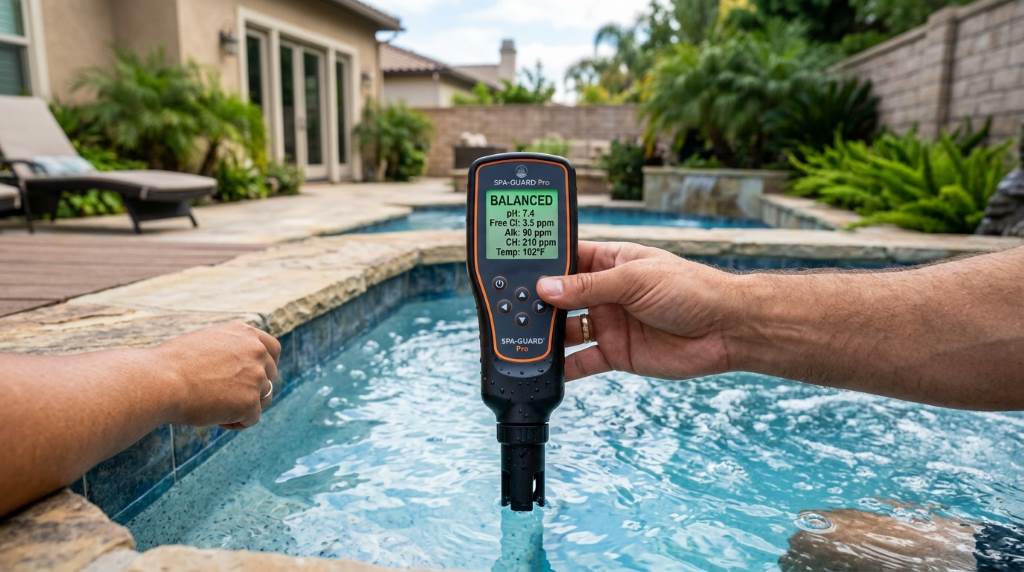
San Diego homeowners use a variety of tools to test spa water accurately. Test strips are the most common due to their ease of use and quick results. However, liquid test kits offer more precise readings for experienced users. Digital testers are also gaining popularity for their convenience and accuracy. Each method has its benefits depending on the user’s preference. Therefore, choosing the right tool can improve testing consistency.
Here are common testing tools used in home spas:
- Test strips for quick daily checks
- Liquid kits for detailed analysis
- Digital testers for accurate readings
- Smart monitoring systems for automation
Using reliable tools ensures accurate results and better water management. Additionally, storing testing supplies properly helps maintain their effectiveness. This small step can improve long-term accuracy significantly. As a result, homeowners gain better control over spa maintenance.
Common Spa Water Issues in San Diego Homes
San Diego’s environment creates unique challenges for spa owners. High temperatures and sun exposure can lead to rapid chlorine loss. This often results in cloudy or unsafe water if not addressed quickly. Additionally, coastal areas may introduce salt and minerals into the water. These elements can affect chemical balance over time. Therefore, regular testing helps identify and fix these issues early.
Another common problem is scaling caused by hard water. Mineral buildup can damage spa surfaces and equipment if left untreated. Regular testing of calcium hardness helps prevent this issue. Furthermore, frequent spa use increases organic contaminants in the water. This requires consistent sanitizer adjustments to maintain cleanliness. By staying proactive, homeowners can avoid costly repairs and replacements.
Related:
Health advice and care from the age of forty
7 health tips for your physical and mental well-being
Benefits of Routine Spa Water Testing
Routine testing offers several benefits that go beyond water clarity. First, it ensures a safe environment by reducing bacteria and harmful contaminants. This is especially important for families and frequent users. Additionally, balanced water improves the overall spa experience by preventing odors and irritation. Consistent testing also extends the lifespan of spa equipment. As a result, homeowners save money on repairs and replacements.
Another advantage is improved energy efficiency. Clean and balanced water allows filtration systems to work more effectively. This reduces strain on pumps and heaters over time. Moreover, maintaining proper chemical levels reduces the need for frequent water changes. Consequently, homeowners conserve both water and energy. These benefits make routine testing a smart long-term investment.
Best Practices for San Diego Spa Owners
To maintain optimal spa water quality, homeowners should follow a structured routine. First, test water regularly based on usage and environmental conditions. Second, keep a log of test results to track changes over time. This helps identify patterns and prevent recurring issues. Third, adjust chemicals gradually to avoid sudden imbalances. Small, consistent changes work better than large corrections.
Additional best practices include:
- Clean filters weekly to maintain water flow
- Shower before using the spa to reduce contaminants
- Cover the spa when not in use to protect from debris
- Schedule professional inspections annually
Following these steps ensures consistent water quality and reduces maintenance stress. Over time, these habits become part of a simple routine. This makes spa ownership more enjoyable and less time-consuming.
The Growing Trend of Smart Spa Monitoring
Technology is changing how homeowners manage spa water in San Diego. Smart monitoring systems now allow users to track water chemistry remotely. These systems provide real-time updates and alerts when levels change. As a result, homeowners can respond quickly without manual testing every day. This adds convenience and improves accuracy in water management.
Smart systems also integrate with mobile apps for easy access. Users can receive notifications and adjust settings from anywhere. This is especially useful for busy homeowners who want a low-maintenance solution. Additionally, these systems help reduce chemical waste by providing precise recommendations. As technology advances, smart monitoring is becoming a popular choice in modern homes.
Conclusion
Routine spa water testing is becoming an essential practice for San Diego homeowners who value safety, efficiency, and comfort. The region’s climate and lifestyle make consistent monitoring more important than ever. By following structured testing routines and using reliable tools, homeowners can maintain clean and balanced spa water year-round. Moreover, adopting smart technologies can further simplify the process and improve results. Taking proactive steps today prevents costly issues in the future. Start implementing a regular spa testing routine now to protect your investment and enjoy a healthier spa experience.
FAQs
How often should I test my spa water in San Diego?
You should test spa water at least 2–3 times per week, or daily with heavy use.
What happens if spa water is not tested regularly?
Water can become unsafe, leading to bacteria growth, odors, and equipment damage.
Can San Diego weather affect spa water chemistry?
Yes, heat and sunlight can quickly reduce sanitizer levels and change water balance.
Are digital spa testers better than test strips?
Digital testers are more accurate, but test strips are quicker and easier for daily use.
Do I need to check cyanuric acid regularly?
Yes, especially in sunny climates, to ensure chlorine remains effective.
Sorry, the comment form is closed at this time.