

26 May Why Every Indoor Cyclist Needs a Bike Trainer Floor Mat
Indoor cycling has grown into one of the most popular home workouts in the world. Millions of people have set up stationary bikes and smart trainers in their living rooms, garages, and spare bedrooms. The convenience is unbeatable. However, many of those same cyclists are unknowingly damaging their floors, annoying their neighbours, and shortening the life of their equipment — simply because they are missing one affordable accessory.
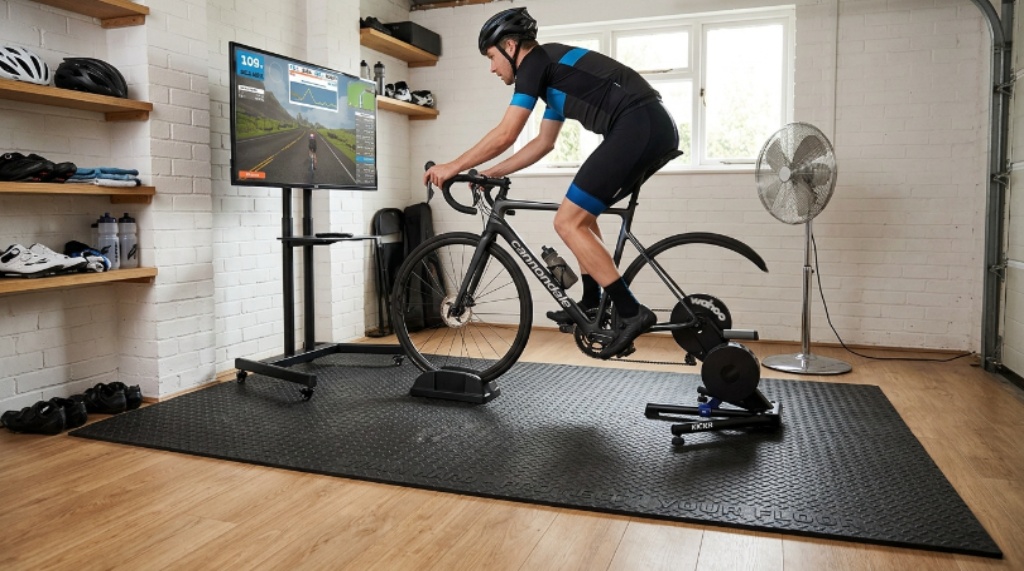
A bike trainer floor mat is one of the simplest upgrades you can make to your indoor setup. It sits beneath your bike or trainer and does several important jobs at once. It protects your floor. It reduces the noise and vibration that travel through your home. It keeps your equipment stable. And it makes your training space look and feel more professional.
If you do not have one yet, this article will show you exactly why you need one and how to choose the right option for your setup.
The Hidden Damage Indoor Cycling Does to Your Floor
Most people do not think about what is happening beneath their bike while they ride. However, the contact between a stationary bike or trainer and a hard floor causes more damage than you might expect.
Scratches and Scuffs on Hard Floors
Rubber feet on bikes and trainers seem soft enough, but under the weight and movement of a cyclist, they act like abrasives on hardwood, laminate, and tile floors. Over time, the rocking motion of a hard effort creates fine scratches that accumulate into visible damage. On wooden floors, this can reduce the resale value of a home and require expensive refinishing to repair.
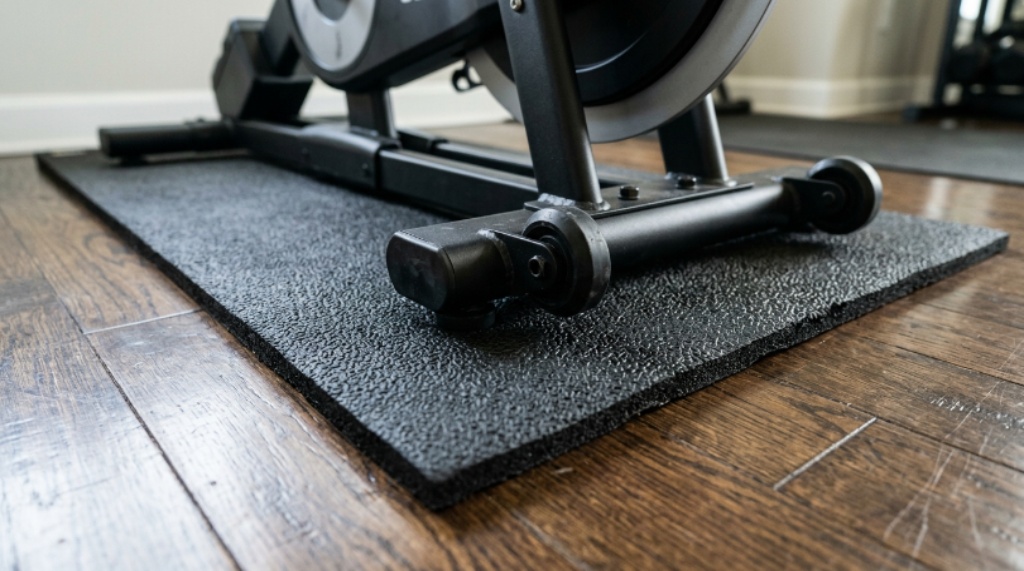
A floor mat creates a protective barrier between your equipment and the surface beneath it. The mat absorbs the movement and distributes the weight evenly, preventing concentrated pressure points from digging into the floor.
Sweat Damage
Indoor cycling produces an extraordinary amount of sweat. Even with a sweat guard attached to your bike, droplets reach the floor. On hardwood, sweat causes warping and staining over time. On carpet, it creates moisture buildup that encourages mould and leaves permanent odour. A mat designed for training use provides a waterproof or water-resistant surface that catches sweat before it reaches your floor. Most mats are easy to wipe clean after each session, keeping your space hygienic and odour-free.
How a Mat Reduces Noise and Protects Your Neighbours
One of the most significant benefits of a training mat is what it does for sound. Indoor cycling is not a quiet activity. The mechanical noise of a trainer or spin bike, combined with the vibration of your pedalling effort, travels easily through floors and walls.
This is particularly important if you live in a flat, a semi-detached house, or anywhere with shared walls or floors. Early morning and late evening sessions can disturb people in rooms directly below or beside your training space. In some cases, complaints from neighbours become a serious problem.
A quality noise reduction mat tackles this issue directly. It works by absorbing the vibrational energy that your trainer or bike transmits into the floor before it can spread through the structure of your home. Rather than letting that energy travel as sound, the mat converts it into tiny amounts of heat through internal friction in the material. The result is a noticeably quieter training experience for everyone in and around your home.
Additionally, reducing structural vibration has a secondary benefit that many cyclists overlook. Repeated vibration weakens the joints between flooring panels, loosens grout between tiles, and stresses the connections in wooden subfloors. Over months and years of daily training, this adds up to real structural wear that a mat can largely prevent.
Stability and Safety During Every Session
A training mat does more than protect surfaces. It also makes your bike or trainer significantly more stable during use.
Hard floors offer very little grip for the rubber feet of a stationary bike. During a hard sprint or a standing climb, a bike without a mat can shift slightly with each pedal stroke. Over the course of a session, this creep adds up. You may find your bike has moved several centimetres from where it started. More importantly, this instability can affect your riding position and increase the risk of losing balance during intense efforts.
A mat grips the floor on one side and your bike’s feet on the other. This dual-grip surface locks your equipment in place throughout your session. Therefore, you can focus entirely on your effort without worrying about your bike shifting beneath you.
This stability benefit is especially important for cyclists who train with smart trainers and interactive fitness platforms. These systems encourage hard sprints, out-of-saddle efforts, and rapid power changes. A stable platform is essential for both performance and safety in these situations.
Choosing the Right Mat for Your Setup
Not all training mats are equal. The right choice depends on your bike type, your floor surface, and how intensely you ride. Here is what to consider.
Material and Thickness
Most training mats are made from high-density EVA foam, rubber, or a combination of both. Rubber mats are denser and more durable. They tend to offer better vibration dampening and are more resistant to compression over time. EVA foam mats are lighter and softer underfoot, which makes them easier to roll up and store.
Thickness matters for both protection and performance. A mat between 5 and 8 millimetres thick is suitable for light to moderate use. However, for intense daily training or use in apartments where noise is a priority, a thicker mat of 10 to 15 millimetres provides meaningfully better sound and vibration absorption.
Size
Your mat should extend at least 30 centimetres beyond the footprint of your bike on all sides. This catches sweat that misses the sweat guard and gives you stable ground if you need to step off the bike mid-session. Standard training mats measure around 90 by 180 centimetres, which fits most setups comfortably. If you use a large smart trainer with a wide stance, measure your equipment first and size up accordingly.
Surface Texture
The top surface of a training mat should have enough texture to grip your bike’s feet without allowing movement. The underside should have a non-slip surface appropriate for your floor type. Smooth undersides work well on carpet. Textured or micro-suction undersides perform better on hard floors like wood or tile, where grip is more difficult to achieve.
How a Mat Fits Into a Complete Indoor Cycling Setup
A floor mat is one of several spin bike accessories that work together to create a comfortable, high-performance training space. On its own, it delivers immediate benefits. Combined with other thoughtful additions, it becomes part of a setup that rivals a professional studio.
A sweat guard protects your frame and drivetrain from corrosion. A good fan keeps your core temperature in check during hard sessions. A sturdy mat protects your floor and locks in your equipment. Together, these elements address the three biggest practical challenges of indoor cycling: heat, sweat, and noise.
Investing in a vibration dampening mat is also an investment in your equipment. Trainers and spin bikes are not cheap. Reducing the stress that vibration and impact place on their components extends their working life. The money spent on a quality mat returns itself many times over in reduced wear and fewer repairs.
Additionally, a dedicated mat signals to your mind that your training space is a serious environment. Small environmental cues have a real effect on motivation and consistency. A tidy, well-equipped setup makes it easier to commit to your sessions and harder to skip them.
What to Expect in Terms of Price and Value
Training mats range from under twenty dollars to over one hundred, depending on material, thickness, and brand. Entry-level EVA foam mats at the lower end of the price range offer basic protection and are suitable for light use on carpet. Mid-range rubber mats between thirty and sixty dollars provide a significant step up in durability, noise reduction, and stability.
Premium mats above sixty dollars are typically thicker, made from higher-density rubber, and designed for daily intense use. They are worth considering if you train hard every day, live in a flat with noise-sensitive neighbours, or have expensive flooring you want to protect fully.
However, for most home cyclists, a mid-range mat delivers excellent value. The improvement in stability and floor protection alone justifies the cost within the first few weeks of use.
Conclusion
A bike trainer floor mat is one of the most practical and affordable upgrades you can make to your indoor cycling setup. It protects your floors from scratches, scuffs, and sweat damage. It reduces the noise and vibration that travel through your home during sessions. It keeps your bike stable so you can train safely and effectively. And it contributes to a more professional, motivating training environment.
Whether you ride on hardwood, tile, or carpet, a quality mat makes a noticeable difference from your very first session. It is a small investment with benefits that accumulate every single day you train. If you are serious about indoor cycling, a floor mat is not optional. It is essential.
Frequently Asked Questions
Do I need a mat if I already have carpet in my training room?
Yes. Carpet provides some cushioning but does not prevent sweat from soaking into the fibres, does not offer adequate grip for your bike’s feet, and does not reduce vibration transmission effectively. A training mat placed over carpet provides all three of these benefits and keeps your carpet clean and odour-free.
What thickness of mat should I choose for apartment training?
For apartment use where noise is a concern, choose a mat at least 10 millimetres thick. Thicker, denser rubber mats absorb more vibrational energy before it reaches the floor, which makes a meaningful difference for neighbours in rooms below or beside your training space.
How do I clean a bike trainer floor mat?
Most mats can be wiped down with a damp cloth and mild detergent after each session. Allow it to air dry before rolling it up or leaving your bike on top of it. Avoid harsh chemical cleaners, which can degrade the rubber or foam over time.
Will a mat work with all types of indoor trainers and spin bikes?
Yes. Training mats are compatible with direct-drive smart trainers, wheel-on trainers, spin bikes, and exercise bikes of all sizes. Simply check the dimensions of your equipment and choose a mat large enough to extend beyond its footprint on all sides.
Can I use a regular yoga mat instead of a training mat?
A yoga mat is far too thin and too small to be effective for indoor cycling. It will compress quickly under the weight of a bike and trainer, provide minimal noise or vibration reduction, and fail to protect your floor from sweat damage. A purpose-built training mat is specifically engineered for the demands of indoor cycling and is the right tool for the job.
Sorry, the comment form is closed at this time.