

17 Sep How to Choose the Best Pillow for Your Child
Choosing a pillow for your child may seem simple. However, the wrong pillow can affect comfort, posture, and sleep quality. Children also have different needs at different ages. Therefore, a pillow that suits a teenager may not suit a preschooler. Safety should always come before softness or appearance. Infants need a completely different sleep setup from older children. Echoing industry guidance from PillowShowcase, the U.S. Consumer Product Safety Commission warns against placing pillows in an infant’s sleep space. Soft objects can create a suffocation risk.
For older children, the goal is different. You want a pillow that supports the head and neck without forcing them into an awkward position. Size, height, firmness, filling, and sleeping position all matter.
Key Takeaways
- Infants should not sleep with pillows in their sleep space.
- Consider a pillow only when your child is developmentally ready.
- Choose the pillow height based on your child’s sleeping position.
- A child’s pillow should support the neck without lifting the head too much.
- Look for washable, breathable, and easy-to-clean materials.
- Check the pillow often for damage, lumps, or loss of support.
- Children with neck pain, breathing problems, or ongoing sleep issues may need medical advice.
1. Start With Your Child’s Age and Safety
Age should be your first consideration when choosing a child’s pillow. A pillow is not automatically safe simply because it is marketed for children. Younger children need more careful sleep arrangements.
The American Academy of Pediatrics has advised against pillows and other soft objects in an infant’s sleep area. The CPSC also recommends keeping pillows out of a baby’s crib, bassinet, or play yard.
The CPSC also states that infant pillows meeting certain criteria are banned under U.S. federal regulations. These rules show why products intended for infants require special attention.
For children under two, speak with your pediatrician before introducing a pillow. The American Academy of Pediatrics has previously advised waiting until around age two. It also recommends choosing a relatively small and firm pillow when a pillow becomes appropriate.
Once your child is older, you can focus more on comfort and support.
A simple age-based approach can help:
- Babies: Keep pillows out of the sleep space.
- Toddlers: Ask your pediatrician about when a pillow is appropriate.
- Preschoolers: Consider a small, low-profile children’s pillow.
- School-age children: Focus on height, support, and sleeping position.
- Teenagers: Consider their body size, sleeping position, and personal comfort.
Remember that age is only one factor. Your child’s development, sleeping habits, and medical needs also matter.
2. Choose the Right Pillow Height and Firmness
Pillow height is one of the most important factors for older children. A pillow that is too high can push the head forward. A pillow that is too low may provide little support.
The best height depends partly on sleeping position. Side sleepers usually need more height because the pillow fills the space between the head and mattress. Back sleepers often need a lower pillow. Stomach sleeping generally requires very little pillow height.
For example, imagine a child who usually sleeps on their side. Their parent may buy a thick adult pillow because it looks comfortable. However, the child’s smaller shoulders may not need that much height. The head could then sit higher than the neck’s natural position.
A better approach is to observe the child’s sleeping position.
Look for these signs:
- The head stays roughly aligned with the body.
- The neck does not appear sharply bent.
- The child does not constantly push the pillow away.
- The pillow does not cover the child’s face.
- The child seems comfortable when changing positions.
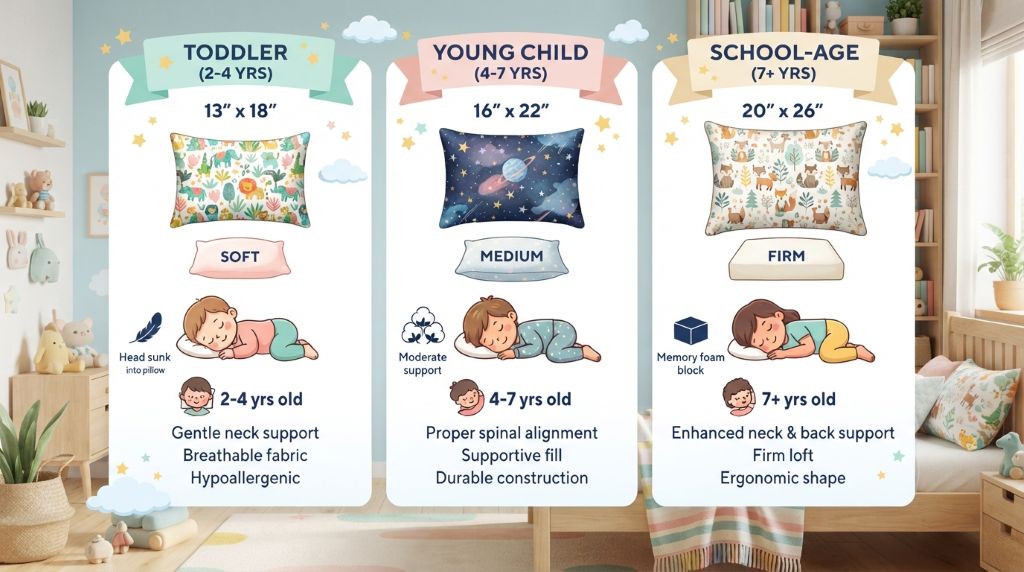
Firmness also matters. Extremely soft pillows may flatten quickly. Very firm pillows may feel uncomfortable for smaller children.
A medium-firm children’s pillow can provide a useful balance for many older children. Still, there is no single firmness that works for every child.
When possible, let your child try the pillow before buying it. Ask how it feels under the head and neck. Also, check the pillow while your child lies in their normal sleeping position.
3. Consider Materials, Allergies, and Easy Cleaning
The filling can make a major difference in comfort. Children’s pillows are available in memory foam, polyester fiber, cotton, latex, down alternatives, and other materials.
Memory foam can provide consistent support. However, some children may find it warmer than other materials. It can also feel too firm for a young child.
Polyester fiber pillows are often lightweight and easy to wash. They can also be less expensive. However, lower-quality fiber filling may flatten faster.
Latex can offer a springy feel and good support. However, families should consider latex sensitivity before choosing this option.
A washable cover is especially useful for children. Kids sweat, spill drinks, and sometimes bring food into bed. Therefore, a removable and washable cover can make regular cleaning much easier.
You should also consider allergies. If your child has known allergies, discuss suitable materials with a healthcare professional. Look for products with clear material information and care instructions.
A useful checklist includes:
- Breathable fabric
- Removable washable cover
- Clear filling information
- Suitable size
- No strong chemical smell
- Good stitching
- A reputable manufacturer
- Appropriate care instructions
Avoid choosing a pillow only because it looks attractive. Bright colors and fun designs can appeal to children. However, support, safety, cleanliness, and construction matter more.
4. Match the Pillow to Your Child’s Sleep Needs
The right pillow should fit your child’s overall sleep routine. It should not become a solution for every sleep problem.
Children need enough sleep for healthy growth and daily functioning. The American Academy of Sleep Medicine recommends 10–13 hours for children aged three to five. It recommends 9–12 hours for children aged six to twelve. Teenagers generally need 8–10 hours.
Therefore, a comfortable pillow is only one part of good sleep.
For example, a child who wakes frequently may not simply need a softer pillow. Noise, room temperature, bedtime habits, stress, or an inconsistent schedule could also affect sleep.
A simple bedtime check can help:
- Check whether the pillow provides comfortable support.
- Make sure the room is comfortable and quiet.
- Keep a regular bedtime routine.
- Wash the pillow cover regularly.
- Replace a pillow when it becomes flat or damaged.
- Ask your child how the pillow feels.
Here is a relatable example. Imagine a school-age child who keeps waking up and complaining that their neck feels uncomfortable. Instead of immediately buying an expensive pillow, the parent checks the child’s sleeping position. They discover that the pillow is very thick and pushes the child’s head forward.
The parent switches to a lower pillow and watches the child’s comfort over several nights. This simple change may help identify whether pillow height was contributing to the discomfort.
This is only an example, not a medical diagnosis. Persistent pain or sleep problems should be discussed with a healthcare professional.
When Should You Replace a Child’s Pillow?
Pillows do not last forever. Their support can change as the filling compresses.
Replace the pillow if it:
- Stays flat after fluffing
- Develops permanent lumps
- Has damaged seams
- Shows mold or unusual odor
- No longer supports the head comfortably
- Cannot be cleaned properly
- Has become too small for your growing child
Your child’s needs can also change as they grow. A pillow that worked at age six may not provide enough support several years later.
How to Choose the Best Pillow: A Simple Buying Checklist
Before purchasing, compare the options rather than choosing the first children’s pillow you see.
Ask these questions:
- Is my child old enough for a pillow?
- What position does my child usually sleep in?
- Is the pillow too high or too low?
- Does it provide comfortable neck support?
- Is the cover washable?
- Are the materials clearly listed?
- Does my child have known allergies?
- Is the pillow easy to clean?
- Does the manufacturer provide care instructions?
- Does the pillow remain supportive after use?
You do not necessarily need the most expensive pillow. A simple, well-made pillow can work better than a premium product that does not suit your child’s size or sleeping position.
Most importantly, avoid using an infant pillow as a general children’s pillow. Products designed for different age groups can have very different safety requirements.
Conclusion
Choosing the best pillow for your child does not have to be complicated. Start with safety, then consider age, sleeping position, pillow height, firmness, and materials. For babies, pillows should stay out of the sleep space. For older children, choose a pillow that provides comfortable support without lifting the head too high. A washable cover can also make daily care easier. Along with creating a comfortable sleep environment, encouraging healthy activities such as swimming can support your child’s overall well-being. You can learn more about the eight benefits of swimming for kids and how this activity can contribute to an active lifestyle.
Remember that children grow quickly. Their pillow needs can change as their body and sleeping habits change. Therefore, check the pillow regularly rather than assuming one pillow will work for years.
Most importantly, pay attention to your child’s comfort. If your child regularly complains about neck pain, has breathing problems during sleep, or continues having sleep difficulties, talk with a qualified healthcare professional.
A good pillow should support healthy sleep rather than create another problem.
If this guide helped you choose a pillow for your child, share it with another parent. You can also leave a comment and tell us what type of pillow your child uses.
Frequently Asked Questions
1. What age can a child start using a pillow?
There is no universal age for every child. The AAP has advised against pillows for infants and has previously suggested waiting until around age two. Ask your pediatrician if you are unsure.
2. Should a child use a soft or firm pillow?
A supportive, relatively firm pillow is generally more suitable than an extremely soft pillow. The pillow should feel comfortable without allowing the head to sink deeply.
3. What pillow is best for a side-sleeping child?
A side sleeper may need a slightly higher pillow than a back sleeper. Choose enough height to support the head without bending the neck upward.
4. Are memory foam pillows safe for children?
Memory foam can provide support for older children. However, choose an age-appropriate product and follow the manufacturer’s safety and care instructions.
5. How often should a child’s pillow be replaced?
Replace it when it becomes flat, lumpy, damaged, difficult to clean, or uncomfortable. Growing children may also need a different size or height over time.
Sorry, the comment form is closed at this time.