

23 Sep How to Choose a Hairstyle That Works With Your Natural Texture
Key Takeaways
- The best hairstyle works with your texture, not against it.
- Fighting your natural texture leads to more damage and effort.
- Face shape and texture together guide the right cut.
- Low-maintenance styles often look better long term.
- A good stylist considers texture before suggesting any cut.
Choosing a hairstyle often starts with a photo from social media. However, that photo may not suit your natural hair texture at all. Many people try to copy a style that works against how their hair naturally behaves. As the experts at NewJerseyStylist.com caution, this mistake often leads to frustration, extra styling time, and disappointing results. Instead, choosing a style that works with your texture makes life easier. It also helps your hair look healthier and more natural daily. In this article, we explain how to pick the right hairstyle. You will learn how texture, cut, and maintenance all work together.
Why Texture Should Guide Your Hairstyle Choice
Hair texture affects how a style falls, moves, and holds shape. Straight hair behaves differently than curly or coily hair under the same cut. Therefore, a style that looks sleek on straight hair may look uneven on curls. Additionally, texture affects how much daily styling a haircut will need. A cut designed for straight hair may require constant straightening on wavy hair. This adds extra time and heat damage to your routine. On the other hand, cuts designed around your natural texture require less effort. According to hairstylists interviewed by Byrdie, texture-based cutting is becoming a standard approach in modern salons. This method respects how hair naturally falls and moves. As a result, the final style looks more balanced and intentional. Ignoring texture often leads to styles that look good for one day only. After washing, the true texture returns, ruining the original shape. Therefore, working with your texture creates longer-lasting results. It also reduces the need for constant restyling throughout the week. Understanding this connection helps you make smarter choices at the salon. It also helps you communicate more clearly with your stylist.
Best Hairstyles for Straight Hair
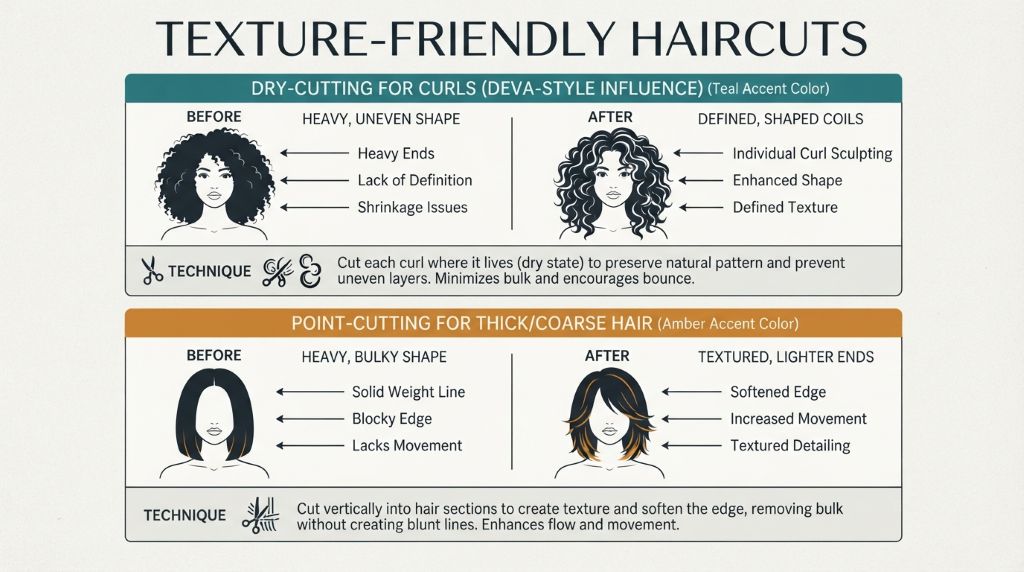
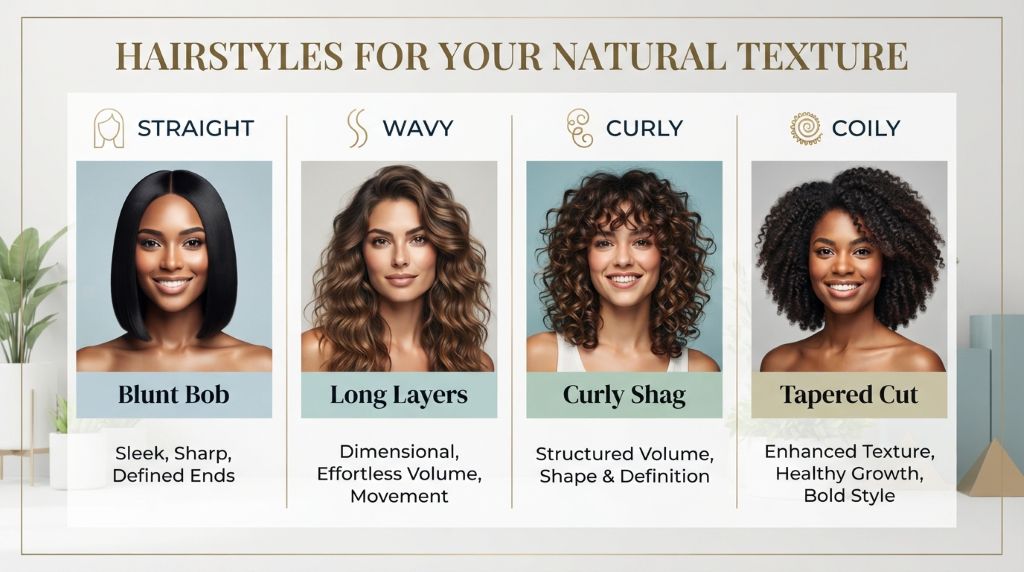
Straight hair offers a smooth, sleek base for many hairstyles. However, it can also appear flat without the right cut. Layered cuts work well to add movement and volume. Additionally, blunt cuts create a bold, clean look for straight hair. This texture holds sharp lines better than curly or wavy hair. Face-framing layers can also soften strong facial features effectively. Straight hair styles well with minimal heat, reducing long-term damage. Additionally, straight hair shows shine more clearly than other textures. Therefore, cuts with strong lines highlight this natural shine beautifully. Bangs also work well, since straight hair keeps them looking sharp longer. However, fine straight hair may need layers to avoid looking thin. On the other hand, thick straight hair can handle heavier, blunt styles. A skilled stylist will consider hair thickness alongside texture. This ensures the final cut suits both texture and volume. Straight hair also allows for easy transitions between casual and formal looks. A simple blowout can completely change the style’s appearance. Therefore, straight hair offers great versatility with relatively low maintenance. Choosing the right length and layering technique makes all the difference.
Best Hairstyles for Wavy Hair
Wavy hair offers natural texture that many people try to recreate artificially. Therefore, choosing a cut that enhances this texture saves time and effort. Long layers work particularly well for wavy hair types. These layers allow waves to move freely without becoming too heavy. Additionally, medium-length cuts often highlight natural wave patterns beautifully. Blunt cuts, however, can sometimes weigh waves down unnecessarily. Therefore, textured or layered ends usually work better for this hair type. Face-framing pieces can also enhance natural movement around the face. According to stylists featured in Allure, wavy hair thrives with soft, undefined layers. This approach avoids fighting the hair’s natural bend. Additionally, wavy hair styles well with minimal manipulation during drying. Diffusing or air-drying often produces excellent natural results. Choppy or textured bobs can also work well for shorter wavy styles. These cuts add movement without requiring excessive styling time. However, very blunt or heavy bangs may not suit looser wave patterns. Therefore, soft, side-swept bangs often blend more naturally. Overall, wavy hair benefits from cuts that support, rather than restrict, its natural flow. This creates effortless, everyday styling with minimal daily effort required.
Best Hairstyles for Curly Hair
Curly hair requires cuts that respect its natural spring and shape. Unlike straight hair, curls shrink significantly once fully dry. Therefore, stylists often cut curly hair while it is dry, not wet. This approach shows the true length and shape immediately. Layered cuts work exceptionally well for curly hair types. These layers reduce bulk while enhancing natural curl definition. Additionally, rounded shapes often complement the natural curl pattern beautifully. Blunt, one-length cuts can sometimes create a triangular shape on curly hair. Therefore, layering helps balance volume more evenly throughout. According to the Deva Cut method, popularized by DevaCurl, dry-cutting techniques have become increasingly popular for curly textures. This method focuses on individual curl shape rather than uniform length. Additionally, curly hair often benefits from shorter layers around the face. This helps frame features without overwhelming the overall shape. Bangs can work for curly hair but require careful consideration. Curly bangs often shrink more than expected once fully dry. Therefore, discussing shrinkage with your stylist beforehand is essential. Overall, curly hair styles best when cuts embrace its natural spring and volume. This creates a fuller, more defined shape with less daily effort.
Best Hairstyles for Coily Hair
Coily hair has the tightest curl pattern and requires thoughtful cutting techniques. This texture often shrinks the most compared to other hair types. Therefore, stylists must account for significant shrinkage when cutting coily hair. Shape-focused cuts work particularly well for this texture. Additionally, layered cuts help distribute volume evenly across the head. Blunt cuts can sometimes create unwanted bulk with coily hair. Therefore, gradual layering often produces a more balanced, rounded shape. Protective styles, such as twists or braids, also influence cutting decisions. Many people choose versatile cuts that adapt well to different styles. According to the American Academy of Dermatology, low-manipulation styling helps protect coily hair from breakage. This makes cut choice especially important for long-term hair health. Additionally, coily hair often benefits from face-framing layers around the front. This softens the overall shape without sacrificing volume. Shorter cuts can also work beautifully for coily textures. These styles highlight natural curl definition with minimal daily maintenance. However, length retention should be discussed carefully with your stylist. Overall, coily hair thrives with cuts that celebrate its natural volume and shape. This creates a strong, confident look with reduced daily styling effort.
How to Communicate With Your Stylist About Texture
Clear communication helps ensure your haircut matches your natural texture. Bring photos, but also explain your hair’s natural behavior honestly. For example, mention if your hair frizzes easily or falls quickly. Additionally, share your current styling routine and available time. This helps your stylist recommend a realistic, low-maintenance option. Ask questions about how the cut will look while air-drying. This gives you a clearer idea of daily maintenance requirements. Consider these simple tips before your next appointment:
- Bring reference photos with similar hair texture to yours.
- Explain your current styling habits and available time.
- Ask how the cut will look without heat styling.
- Discuss shrinkage if you have curly or coily hair.
- Request a cut that supports low-maintenance daily styling.
These small steps improve communication and overall satisfaction with your haircut.
Conclusion
Choosing a hairstyle should always start with understanding your natural texture. Working with your texture, rather than against it, creates better long-term results. Additionally, it reduces daily styling time and prevents unnecessary damage. Every texture, from straight to coily, has flattering options available. Therefore, focus on cuts that celebrate your hair’s natural behavior. Along with choosing the right hairstyle, maintaining healthy personal-care habits can help you feel fresh and confident, especially during warmer weather. For additional summer personal-care guidance, see how to eliminate body odor internally in hot summer?. If you are ready for a hairstyle that truly works for you, start by understanding your texture today. Your hair will look healthier, fuller, and more effortless every day.
Frequently Asked Questions
Should curly hair be cut wet or dry?
Curly hair is often best cut dry, since curls shrink significantly once fully dried.
Can one haircut work for all hair textures?
No, hairstyles should be adjusted based on texture to ensure the best possible fit and style.
How do I know if a haircut suits my texture?
A suitable haircut should look balanced and require minimal styling once fully dry.
Does hair texture change how bangs look?
Yes, curly and coily bangs often shrink more than straight or wavy bangs.
How often should I get a haircut for my texture?
Most textures benefit from a trim every eight to twelve weeks to maintain shape.
Sorry, the comment form is closed at this time.